Train Travel in Spain: Tickets, Companies, Luggage and Practical Tips
In short: is train travel in Spain easy?
Train travel in Spain is fast, convenient and relatively easy once you understand how the different companies, services and stations are organised. High-speed trains connect Madrid with cities such as Barcelona, Seville, Valencia, Málaga, Alicante and Zaragoza, while regional lines reach many smaller towns and villages.
The most confusing part is usually not the journey itself, but choosing the ticket. On the same route, there may be trains operated by Renfe, OUIGO and iryo, and each company has its own fares, luggage rules, change conditions and additional services.
After buying the ticket, everything becomes easier. The ticket shows the station, time, train number, carriage and seat, and at large stations there are information boards and staff you can ask for help.
The most important rules are:
- check exactly which station your train departs from;
- buy a return ticket as well when planning a day trip;
- arrive early;
- carry an identity document;
- download the ticket to your phone;
- check the luggage and booking-change rules.
Spain has one of the most developed high-speed railway networks in Europe. Three companies operate on the main liberalised high-speed routes – the state-owned Renfe, the French OUIGO España and the Italian-Spanish iryo. Not every company serves every destination, so when searching for a ticket, check which operators travel on the specific route. It is also a good idea to compare prices.
Renfe, OUIGO or iryo – which company should you choose?
There is no single company that is always the best choice. The decision depends on the route, time, final price, luggage and level of comfort you are looking for.
When should you choose Renfe?
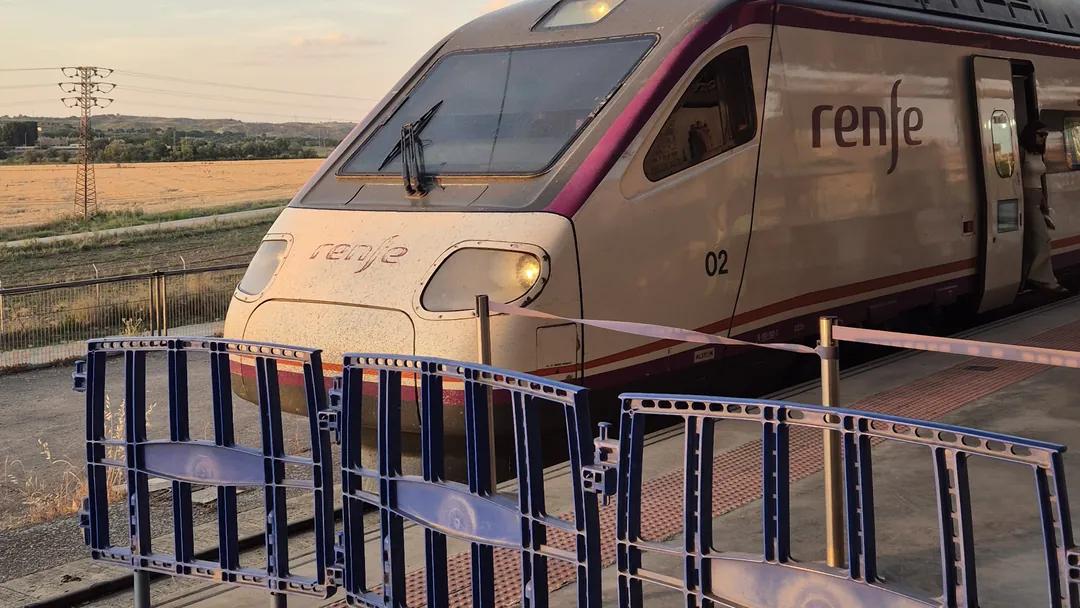
Renfe has the widest railway network and operates high-speed, regional and commuter lines. For many smaller towns and routes, it is the only rail option.
Renfe is a suitable choice when:
- you are travelling to a city not served by competitors;
- you need more departure times to choose from;
- you are combining a high-speed and regional train;
- you are travelling with Avant, Alvia or Media Distancia;
- you want a more flexible fare;
- you value a larger network of ticket offices and station services.
The disadvantage is that the website, along with the many types of trains, fares and discounts, can confuse someone travelling by train in Spain for the first time.
When should you choose OUIGO?
OUIGO is a low-cost high-speed operator. The company often offers very good starting prices, especially when the ticket is bought earlier.
OUIGO is a suitable choice when:
- you are looking for the lowest price;
- you are travelling on a direct route;
- your date and time are fixed;
- you are carrying limited luggage;
- you do not need very flexible conditions;
- you are ready to pay extra only for the services you use.
Check the final price, because seat selection, additional luggage, Wi-Fi and more flexible conditions may be charged separately.
When should you choose iryo?
iryo positions itself somewhere between low-cost and premium travel. The trains offer more space, power sockets, USB ports, free Wi-Fi and different comfort levels.
iryo is a suitable choice when:
- you care about a comfortable seat and more space;
- you plan to work during the journey;
- you want a free internet connection;
- you prefer better food options;
- you are looking for a balance between price and comfort;
- you are travelling on a route served by the company.
Some of the higher fares include wider seats, more flexible conditions and food served at your seat.
How do you make the right choice?
Do not compare only the first price shown in the search results. Check:
- the exact departure and arrival station;
- the duration;
- the number of stops;
- the included luggage;
- seat selection;
- change conditions;
- refund conditions;
- Wi-Fi and food;
- the final price after adding all services.
For a short tourist trip, the best choice is often the most convenient time, not necessarily the cheapest ticket.
Main types of Renfe trains
AVE (Alta Velocidad Española) is Renfe’s main high-speed service for connections between major cities such as Madrid, Barcelona, Seville, Valencia and Málaga. The trains travel at around 300 km/h, and some lines and trainsets allow slightly higher speeds. Different fares are available – from standard options to Premium, with wider seats, more flexible conditions and food served at your seat.
AVLO (Alta Velocidad Low Cost) is Renfe’s low-cost high-speed service. The trains travel at up to 300 km/h, but they have only standard class, more densely arranged seats and stricter luggage rules. There is no traditional restaurant car, but depending on the route, there may be vending machines for drinks and snacks or a mobile bar.
Alvia combines high-speed and conventional railway lines. Its special gauge-changing system allows the train to continue to cities that are not reached by the standard high-speed network. The speed is up to around 250 km/h on high-speed sections and lower on conventional lines.
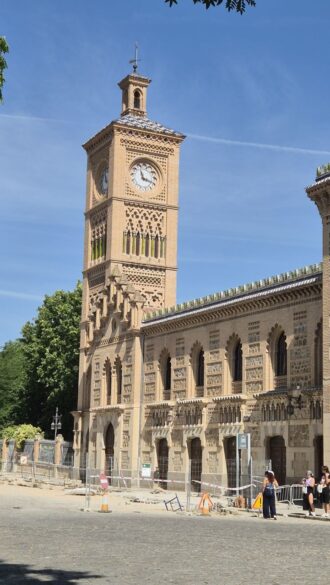
Avant is a high-speed service for medium distances between relatively close cities. The trains travel at up to around 250 km/h and are used both by tourists and by people who commute regularly for work or study. The Madrid – Toledo route, for example, is served by Avant. On these short journeys, there is usually no catering.
OUIGO is a low-cost high-speed operator, while iryo focuses more on comfort, different classes and quality food on board. With both companies, check in advance what luggage and which additional services are included in the fare you choose.
Tip: If you register for the Más Renfe loyalty programme to collect points, your first ticket purchase after registration may qualify for a 10% discount. Check their website for the exact conditions of the promotion and the loyalty programme.
How much do tickets cost?
Train ticket prices in Spain vary significantly depending on the route, operator, time and moment of booking. Promotional fares on AVLO and OUIGO start from around €7-9, but for popular times and longer routes, tickets often cost between €20 and €60, and when bought at the last moment they can exceed €100. The lowest prices usually come with stricter conditions and may not include larger luggage, seat selection or the option to change the booking. That is why you should compare the final price and buy earlier, especially for Fridays, Sundays and holiday periods.
The main factors are:
- the route and distance;
- the day and time of travel;
- how early you buy;
- the remaining available seats;
- the operator;
- the selected class;
- change and cancellation options;
- included luggage and additional services.
Compare companies by the total final price, not just by the initially displayed fare.
Why do train prices in Spain change?
For high-speed and long-distance routes, prices are usually dynamic. This means that a ticket for the same train may cost a different amount depending on the moment of purchase, demand and the remaining available seats.
The main factors are:
How early you buy
The lowest fares usually appear when tickets are first released. Once the cheapest seats are sold, the system starts offering the next price levels.
The day and time
Friday evenings, Sunday afternoons, holidays and the beginning or end of vacation periods are more in demand. Early morning or midday trains can sometimes be cheaper.
The popularity of the route
Prices on busy lines such as Madrid – Barcelona can be very competitive because several operators are available. On routes served by only one company, the choice is more limited.
The type of fare
The cheapest ticket usually has stricter conditions. More expensive fares may include:
- changing the departure time;
- cancellation;
- larger luggage;
- seat selection;
- a wider seat;
- food;
- access to a business lounge;
- transfer to another train on the same day.
Remaining seats
Even when the journey is several weeks away, the price may be high if a large part of the seats has already been sold.
Important! For a day trip, do not book only the outbound journey. You may find a cheap morning ticket, but the evening return trains may already be full or significantly more expensive.
Where do you buy train tickets in Spain?
The safest option is to buy the ticket directly from the official website or app of the company you will be travelling with.
The official channels are:
- the website and app of Renfe;
- the website and app of OUIGO;
- the website and app of iryo;
- station ticket offices;
- ticket machines;
- authorised travel agencies;
- international rail-ticket platforms.
Buying directly from the company makes changing or cancelling the ticket easier. If there is a problem, you communicate directly with the carrier, not with an intermediary.
Platforms that compare several companies are convenient for checking times and prices. Before paying, however, check whether they charge an additional fee and who is responsible for handling any change or refund.
Do you need an account?
Some companies allow you to buy a ticket without registration, but having an account makes it easier to:
- find the booking;
- download the ticket again;
- change the date or time;
- add luggage;
- choose a seat;
- receive notifications;
- save passenger details.
Having an account may give you the opportunity to participate in a loyalty programme such as Mas Renfe.
After purchase, download the ticket as a PDF or add it to the app. Also take a screenshot of the QR code so that you do not depend on internet access at the station.
Tip: If you feel confused by the variety of websites, you can simply buy your ticket at the carrier’s office at the station before travelling, or earlier if you want more options for departure times.
There you take a service ticket from a machine, and when your number appears on the monitor, you go to the indicated desk. The staff member will guide you on how to find the platform and other important details.
Most common mistakes when buying a ticket
Buying only an outbound ticket
For a day trip, this can lead to an inconvenient or very expensive return time.
Choosing the wrong station
Check not only the city, but the full name of the station. Segovia-Guiomar, for example, is located outside the centre, while Madrid Atocha and Madrid Chamartín serve different routes.
Looking only at the starting price
The low fare may not include a large suitcase, seat selection, changes or cancellation.
Entering your name incorrectly
For personalised tickets, the name must match the identity document. Check it before paying.
Not reading the change conditions
The cheapest ticket may not allow any change or may require an additional payment and the fare difference.
Not checking the time and date
Especially in mobile apps, it is easy for the wrong date or time from a previous search to remain selected.
Choosing too short a connection
When the tickets are separate or the trains are operated by different companies, the next operator may not be responsible for the missed connection.
Arriving just before departure
For high-speed trains, there is a ticket and luggage check. The doors may be closed before the official departure time.
Not downloading the ticket in advance
Do not rely only on mobile data or station Wi-Fi. Save the PDF file and take a screenshot of the QR code.
Assuming Wi-Fi is guaranteed
The connection may be slow or unstable. Download what you need in advance.
Not checking what luggage is included
Especially with low-cost operators, a larger suitcase may be charged separately.
Not carrying an identity document when buying from a ticket centre at the station
At the ticket centre, they request an identity document for registration, not only to confirm eligibility for a discount.
How do you navigate the station?
The ticket shows the train number, time, departure and final station, carriage and seat. On the electronic boards, look for the train number and its final destination, not only the city where you will get off.
The platform or gate is sometimes announced relatively close to the departure time. At large stations there may also be a ticket and luggage check, so arrive at least 30-45 minutes earlier.
On the train, follow the electronic boards and announcements for the next stop. If in doubt, ask a staff member, especially if you are getting off at an intermediate station.
It may happen that Valladolid is announced as the next stop, the electronic board also shows Valladolid, but there is a stop in Segovia that is announced only shortly before you arrive.
How do you find the train, platform, carriage and seat?
On the ticket you will usually see:
- the company;
- the train number;
- the date;
- the time;
- the departure station;
- the final station;
- the type of train;
- the carriage number;
- the seat number;
- a QR code for inspection.
In Spanish, coche means carriage, while plaza or asiento means seat.
How do you find the train on the board?
At the station, look for the Salidas board, which shows departing trains. Use mainly the train number and time to orient yourself.
The board may show the final destination of the train, not the city where you are getting off. For example, your train may stop in Zaragoza, but the board may say Barcelona because that is its final stop.
That is why you should not rely only on the name of your city. Compare:
- the train number;
- the time;
- the company;
- the final destination.
When is the platform announced?
The platform or boarding area is not always displayed very early. Watch the board and do not move too far away as the departure time approaches.
Different stations may use the words:
- vía – track or platform;
- andén – platform;
- acceso – entrance or access area;
- embarque – boarding;
- puerta – door, exit or gate.
For high-speed trains, you may first go through a ticket and luggage check and then be directed to the specific platform.
How do you find the carriage?
On the platform, there are signs showing the position of the carriages. Check the number of your coche before boarding, because the trainsets can be long. Also, at the end and beginning of the carriages themselves, there is an illuminated display showing which coche number it is.
Of course, if you are late and do not have time to move to your carriage, or you board the wrong one by mistake, you can walk through the internal doors, but with a large suitcase this is not very convenient.
How do you find your seat?
The number is marked above the seat, on the backrest or next to the window. Also check whether the seat is:
- by the window – marked with v next to the seat number or with a window icon;
- by the aisle – marked with p;
- on the upper or lower level in a double-decker train.
If someone is sitting in your seat, first compare your tickets. The person may have confused the carriage, number or date.
What is the luggage policy on trains in Spain?
When travelling by train in Spain, luggage is not checked in at a separate counter as it is for a flight. You take it onto the train yourself and are responsible for carrying it and placing it in the designated spaces.
The permitted dimensions and number of suitcases depend on the company, type of train and fare you choose. This is especially important with low-cost services such as AVLO and OUIGO, where larger luggage may be charged separately.
Luggage on Renfe trains
On Renfe’s standard services, including AVE, Alvia, Avant, Euromed and Intercity, each passenger may carry up to three pieces of luggage. Their total weight must not exceed 25 kg, and the sum of the dimensions of the three pieces must be up to 290 cm.
The maximum size of a single suitcase is 85 x 55 x 35 cm.
The policy of the low-cost AVLO service is stricter. The basic ticket includes:
- one small bag or backpack up to 36 x 27 x 25 cm;
- one cabin suitcase up to 55 x 35 x 25 cm.
For AVLO, there is no stated weight limit for these two included items, but they must meet the size requirements. A larger additional suitcase up to 85 x 60 x 35 cm, or up to 180 cm in total dimensions, is charged separately.
It is cheapest to add additional luggage when buying the ticket. If you add it later or only when boarding, the price is higher.
Important! In any case, check the current luggage conditions on Renfe’s website.
Luggage on OUIGO
The standard OUIGO ESENCIAL ticket includes:
- one small bag up to 36 x 27 x 15 cm;
- one cabin suitcase up to 55 x 35 x 25 cm, including handles, wheels and external pockets.
When you need a larger suitcase, you must add the extra luggage option. It may have a total sum of dimensions of up to 200 cm and weigh up to 25 kg.
In some packages, such as OUIGO Plus, one additional or XL item of luggage is included. Check the final price carefully, because the cheap basic ticket may become more expensive after adding a suitcase, seat selection and other services.
Luggage must be added in advance, no later than the deadline set by the company before departure. If you arrive at the check with an undeclared large suitcase, you may have to pay a higher fee.
Important! In any case, check the most up-to-date information about the luggage policy on OUIGO’s website.
Luggage on iryo
The Inicial and Inicial Superior fares on iryo include:
- one bag or backpack up to 36 x 27 x 15 cm;
- one cabin suitcase up to 55 x 35 x 25 cm.
With Inicial Superior, a large suitcase up to 80 x 55 x 35 cm can be added for an extra fee.
The Infinita fare allows you to take a large suitcase at no additional cost, but it must be declared in advance during the booking. If you arrive with it without having added it to your ticket, you may not be allowed to board the train.
With Infinita Bistró, a large suitcase is included together with the small bag and cabin luggage.
iryo may charge an additional fee for luggage that exceeds the permitted number or dimensions. That is why you should check the pictograms and luggage description on the ticket itself.
Important! Check the most up-to-date luggage conditions on iryo’s website.
Where do you put luggage on the train?
Small backpacks, laptop bags and handbags can be placed under the seat or on the rack above it. Do not leave your wallet, documents, phone or electronics in a suitcase that will be far away from your seat.
Cabin suitcases are placed on the racks above the seats or in the designated luggage spaces in the carriage. Larger suitcases are left in the special vertical racks, which are usually located near the carriage entrances or between groups of seats.
On OUIGO double-decker trains, additional luggage must be left in the luggage space on the same level as your seat. The company indicates that the small bag should be placed above the seat, and the cabin suitcase under it, when the size and seat configuration allow it.
Do not place suitcases:
- on an empty seat;
- in the corridor;
- in front of a door;
- next to emergency exits;
- in a place that blocks passage.
If you cannot find a suitable space, ask a train staff member instead of leaving your luggage in the corridor.
Practical luggage tips
Check the conditions before paying, because the rules can differ not only between companies, but also between the fares of the same operator.
Keep your documents, money, medicines, phone and laptop in a small bag with you. When the large suitcase is in a shared luggage rack, choose a seat from which you can easily see it or check it when the train stops at intermediate stations.
Put a distinctive tag or ribbon on your suitcase, especially if it is black and can easily be confused with someone else’s. On international AVE trains between Spain and France, labelling luggage with a tag is mandatory.
If you are carrying a bicycle, musical instrument, pushchair, skis or other special luggage, check the separate rules. These items may count as one of the permitted pieces of luggage and often need to be folded, disassembled or placed in a suitable case.
Is there Wi-Fi and are there power sockets on trains in Spain?
Many high-speed trains have internet and charging options for devices, but the services depend on the operator and the specific trainset.
Renfe
On AVE and AVLO, Wi-Fi is offered through the PlayRenfe platform. In addition to internet access, it may include films, music, news and entertainment content.
Some trainsets have standard power sockets or USB ports, but their location may be between the seats or underneath them.
OUIGO
OUIGO offers internet through the OUIFI service. It may be charged separately or included in a specific package. Speed and allowed data are limited, so do not rely on the connection for large files or an important video meeting.
The trains have sockets for charging devices. Before travelling, check whether your chosen fare also includes the OUIFUN entertainment platform.
iryo
iryo offers free Wi-Fi and 5G connectivity. Seats have standard electrical sockets and USB ports.
This makes the company convenient for people who want to work during the journey.
Important! Although the company may provide Wi-Fi, it can drop in tunnels, remote areas or busy sections.
Food on trains
Food on Renfe
Some AVE trains have a cafeteria or a mobile bar that passes through the carriages. You can buy coffee, water, soft drinks, wine and beer, sandwiches, sweet and savoury snacks and light meals.
With certain higher fares, food may be included and served at your seat.
On AVLO, the choice is usually more limited. Depending on the train, there may be vending machines or a mobile bar.
AVANT is usually used for short destinations, and food is not served there. You can easily take a drink or something small to eat in about 15 minutes, because the journey itself is around 30 minutes.
Food on OUIGO
OUIGO has OUIBAR, where drinks, coffee, sandwiches, snacks and other light foods are sold.
Through SMARTBAR, you can scan the QR code on the table, place an order from your phone, and the food or drink will be brought to your seat.
Food on iryo
iryo trains have Haizea Bistro with drinks, coffee, tapas, sandwiches and meals. With some fares, you can add a menu when buying the ticket.
The Infinita Bistró fare includes a fuller menu that is served directly at your seat.
Can you bring your own food?
Yes, you can take food and drinks from the station or elsewhere. Avoid products with a strong smell, items that may spill or anything that may disturb other passengers.
For a short journey, it is more sensible to buy water in advance, because there may not be time for the mobile bar to reach your carriage.
Where to stay in Madrid?
You can read the detailed review of the place where we stayed in Madrid in the article “Artistic Apartment in Malasaña, Madrid: An Honest Review for 4 Guests.”
I recommend booking your stay directly here. For your convenience, I have included a box with a map showing available rooms in hotels, apartments and other types of accommodation. You support the blog without paying more, while still using all your Genius and other discounts!
If you would like to use a ready-made 7-day itinerary for Madrid, see also Madrid in 7 Days.
Frequently asked questions about trains in Spain
Does the ticket need to be printed?
Usually not. You can show the QR code from your phone. It is a good idea to have a downloaded PDF or screenshot so that you do not depend on internet access.
How early should I arrive at the station?
For a high-speed train, arrive at least 30-45 minutes in advance. At large and unfamiliar stations, allow even more time for orientation.
Do I need a passport?
Carry a valid photo identity document. Tickets for high-speed and long-distance routes are often named, and checks may be carried out.
Can I buy a ticket at the last moment?
Yes, if there are available seats. However, the price may be higher, and convenient times may be sold out.
Are seats reserved?
On high-speed and long-distance routes, you usually have an assigned carriage and seat. On commuter and some regional trains, seats may not be reserved.
Can I choose my seat?
It depends on the operator and fare. With some tickets, seat selection is included, while with others it is charged separately.
Can I bring my own food?
Yes. You can bring your own food and non-alcoholic drinks, as long as you keep things clean and do not disturb other passengers.
Is there Wi-Fi on all trains?
No. Wi-Fi is offered mainly on high-speed trainsets, and the conditions differ depending on the company.
Are there power sockets by the seats?
Most modern high-speed trains have standard power sockets, USB ports or both. On older and regional trains, this is not guaranteed.
Which company is the cheapest?
OUIGO and AVLO often offer the lowest starting fares, but they do not always have the best final price after adding luggage, seat selection and flexibility.
Which company is the most comfortable?
iryo and the higher AVE fares offer more comfort and services. The real choice depends on the route, price and specific trainset.
How do I know which platform the train departs from?
Follow the Salidas board and look for the train number and time. The platform may be announced relatively close to departure.
What happens if I miss the train?
This depends on the fare. The cheapest tickets usually do not allow a free transfer. Look for a company staff member or ticket office immediately.
Can I use one ticket on a different train?
Only if the fare conditions allow a change or free use of another train. Most standard tickets are valid for a specific time and train.
Where should I put a large suitcase?
Large suitcases are placed in the designated luggage spaces at the beginning or end of the carriage. Small bags can stay on the rack above the seat.
Can I rely on rail transport for a day trip?
Yes. High-speed connections allow easy day trips from Madrid to cities such as Toledo, Segovia, Valencia and Zaragoza. The most important thing is to book the return journey in advance.
If you need a ready made program see also Madrid in 7 days.
You can also read the other articles in my Madrid series: Madrid in 7 days: a personal guide, 10 Madrid attractions: a personal ranking, practical Madrid travel tips for transport, tickets and safety, what and where to eat in Madrid, a review of the artistic apartment in Malasaña, Toledo from Madrid in one day, Segovia from Madrid in one day and my personal ranking of Alcázars and palaces in Spain.
Follow the blog on social media too: TikTok, Instagram, Facebook, YouTube, LinkedIn, X.