

6 Days in Rome: Day 2 – A Walk Through Trastevere, a Visit to the Vatican, Delicious Food and Wine
In the first part of this 6-day Rome itinerary, I described which cultural and historical landmarks you can see without entrance fees, some curious facts about them, and where to grab a bite. In this part, I focus on the bohemian Trastevere district, the Vatican, and more delicious food and wine.
Trastevere and the Basilica of Santa Maria
It’s important not to rush when heading to Trastevere – take your time to soak in the atmosphere and explore the less touristy side streets. Grab a gelato along the way.
If you’re curious, stop by the Basilica of Santa Maria in Trastevere. This is one of the oldest churches in Rome, founded in the 3rd century and considered the first official Christian place of worship in the city. It impresses with its stunning 12th-century Byzantine mosaics that depict scenes from the life of the Virgin Mary. Its interior is warm and golden, evoking a sense of peace and eternity.
Fun fact: According to legend, in 38 BCE, a spring of oil-like substance (“olea sancta”) burst from the ground at the site where the church now stands. Christians later interpreted this as a sign foretelling the birth of Christ, making the church especially sacred.
Source: Krautheimer, Richard. Rome: Profile of a City, 312–1308. Princeton University Press, 1980
There are several thrift shops in the area worth exploring for unique finds. We visited Humana and left with a few great pieces.
Where to Have Lunch?
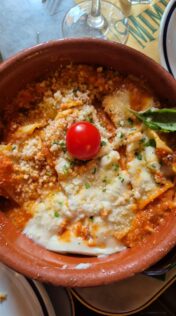
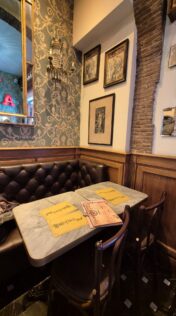
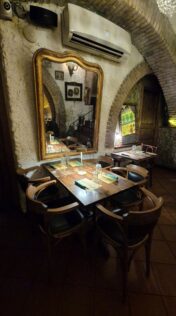
Since we took it easy and time flew by, we ended up having lunch at Mimi e Coco Trast. It’s a popular tourist spot with great reviews. The menu features local-style dishes, including tasty pasta.
A classic Roman pasta is Cacio e Pepe, made with black pepper and aged Pecorino or Parmigiano cheese. Highly recommended. Carbonara and Amatriciana are also popular but slightly heavier due to the use of guanciale – a salty, cured pork cheek.
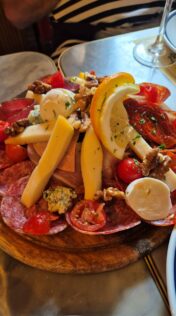
We had a charcuterie board that was excellent, paired with a good wine.
If you’re after something quick, the area is full of street food options: panini, pizza al taglio, arancini, and more.
Arancini (Italian for “little oranges”) are traditional Sicilian rice balls that are filled, breaded, and fried to a golden crisp. The name comes from their shape and color, resembling small oranges.
Tranquillity and Greenery in the Botanical Garden of Trastevere
The Botanical Garden of Rome (Orto Botanico di Roma) is a hidden gem in the heart of Rome, located on the Janiculum Hill near Villa Farnesina. It spans over 12 hectares and houses more than 7,000 plant species from around the world, including a Japanese garden, bamboo grove, and tropical greenhouses. Maintained by Sapienza University, the garden offers tranquility and shaded paths away from the tourist bustle.
Fun fact: Within the garden lie the remains of the ancient Roman Fontana dei Tritoni, one of the oldest mythologically-themed fountains in Rome.
Source: Università di Roma “La Sapienza” – Dipartimento di Biologia Ambientale – Orto Botanico di Roma.
As we had plenty of time left, we ambitiously headed to the largest cathedral in the world – St. Peter’s Basilica. The Vatican was preparing for the major event of the Conclave while still holding masses in memory of the recently deceased Pope Francis.
Visiting the Vatican and Mass at St. Peter’s Basilica
The Vatican is the smallest independent state in the world, both in terms of area (about 44 hectares) and population. Located in the heart of Rome, it is the headquarters of the Roman Catholic Church and home to the Pope, as well as cultural treasures like the Sistine Chapel and the Vatican Museums. It even has its own postal service, radio station, euro coins, and the Swiss Guard.
Fun fact: The Vatican has the highest wine consumption per capita in the world, mainly due to liturgical use and the fact that most residents are clergy or diplomats who often attend official events.
Source: The Wine Institute (2014 report), confirmed by: BBC – The world’s biggest wine drinkers
We found St. Peter’s Square in an unusual state – fenced off for crowd control. Mass was about to begin, and we were quickly ushered through different entrances to evenly fill the enormous basilica with the flood of pilgrims who had come for the Catholic Jubilee year, those attending the funeral of the late pope, journalists, and tourists curious about the upcoming Conclave and who the next pope would be.
St. Peter’s Basilica (Basilica di San Pietro in Vaticano) is the largest Christian church in the world and the center of the Catholic Church. It was built over the believed burial site of Saint Peter, the first pope, and was designed by some of history’s greatest architects, including Bramante, Michelangelo, Raphael, and Bernini. Its dome, designed by Michelangelo, dominates the Roman skyline and offers one of the most breathtaking views of the city.
Fun fact: The letters around the base of the dome are over 2 meters high, yet they appear small from the floor below. This optical and architectural illusion showcases the Renaissance mastery of scale.
Source: Fletcher, Banister. A History of Architecture on the Comparative Method, 20th ed., 1996.
We had the rare opportunity to attend a solemn mass – the final one in memory of Pope Francis. The ushers wore tuxedos with bow ties, and the event was deeply ceremonial, with cardinals from around the world present for the Conclave. I even had the chance to sit in the front row and witness the service up close.
The choir’s performance was captivating, and the prayer for the soul of Pope Francis sounded both mystical and calming. I captured a short video of the moment.
Ending the Day with Prosciutto and Music
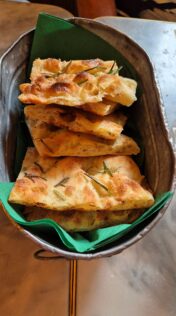
Exhausted after our ambitious itinerary, we headed back to the apartment and picked up some prosciutto, cheese, wine, and sourdough bread on the way. With Italian music playing in the background, we felt amazing. We needed the rest, as more exciting adventures awaited us the next day.
How to get to all these places?
Use this map, specially created by placescases.com for your convenience.
How to book your stay?
I recommend booking your stay directly here. For your convenience, I’ve added a map widget that shows available rooms in hotels, apartments, and other types of accommodation. You support the blog at no extra cost to you and still benefit from all your Genius and other discounts! We stayed in a wonderful 3 bedrooms apartment in the center of Rome.
Where to follow the latest posts of the review and rating blog placescases.com?
Did you like my blog? Great! Then follow placescases.com pages on Instagram, Facebook, YouTube, LinkedIn, X, TikTok, and don’t miss any new publication. It is best to subscribe directly here.
Are you looking for information about good restaurants, hotels, and all kinds of nice places around the world and in Bulgaria? Then dig into the categories of the one-of-its-kind blog for reviews and evaluation of interesting places, refracted through the 5D Sensograph of the 5 human senses – placescases.com. You may find something just for you.
Do you ever wonder how some places differ so much from others in service, environment, and overall experience? This means you are also interested like me in The Experience Economy by Joseph Pine and James Gilmore. I constantly add to my collection reviews about those of them, which practice its principles, regardless of whether intentionally or accidentally. If you are curious to understand which they are, explore the category The Experience Economy.


